
Undergraduate Guide
Student loan guides have a lot of information, which can be easy to get lost in. Let's get back to the basics.

Looking for more information?
Here’s our full 18 page guide with everything you need and one of our webinars.
1. The Beginning
You’re getting money to pay for school. The loan is money you pay back. The cost for taking out the loan is interest.
Interest begins accruing once the loan is sent to the school (aka disbursed). That means once the money is borrowed, your overall cost begins to increase.
Your goal is to get the lowest possible interest rate so you pay the lowest overall cost for taking out the loan.
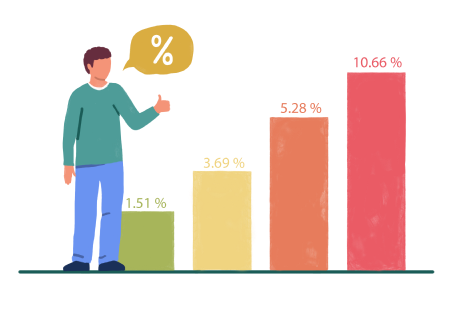
2. Rates
There’s a catch. The lowest possible rates are typically variable – that means the rate may change on a monthly basis. Most parents don’t like the sound of that, and so usually undergraduate families stick with fixed rates.
To get the lowest fixed rates, you need to shop around. By joining Juno, you’ve taken a great first step, and we want you to make sure you’re comfortable with the rates you get.
So, the next step would be to compare what you’re getting with our partner to other lenders.
3. Lenders
Let’s start with the lender your financial aid office loves: the federal government. Parent PLUS student loans can be a great option for people with low credit (below 650) since the rate is the same for everyone.
New for 2026-27: Parent PLUS borrowing is capped at $20,000 per student per year, with a $65,000 lifetime limit per student, if the student first took out an undergraduate loan after July 2026. It used to run all the way up to the cost of attendance, so for a lot of families private loans now have to cover more of the bill. Incoming Parent PLUS borrowers are also no longer eligible for income-driven repayment plans.
But if you’ve got good credit history (650+ FICO) then you might want to consider private student loans. You’ll get customized rates through Juno’s partners as well as other private lenders. They can be substantially cheaper than a Parent PLUS loan.
Example: One parent we’ve worked with compared a 7% fixed loan to the 9.07% Parent PLUS loan. They took into consideration the fees charged by Parent PLUS (4.228%). They tallied up the difference in costs. Federal was thousands of dollars more.
4. Getting the Money
Cool, so you’ve done a bit of shopping around. You got the rates from a few lenders. Juno was the lowest (we knew it). You’re ready to make the move. What now?
Well, most of our members take out a loan anywhere from one month to four months prior to the billing due date (when the school wants the funds). If you’re within that timespan, you’re good to get cracking and finalize the application.
The lender will ask you to accept the terms and then will reach out to the school to confirm the amount. Once everything has been approved and confirmed, the lender will send the money to the school on the schedule requested by the billing department.
Any funds beyond tuition will be passed to the student by the billing department for cost of living (books, apartment, etc.) if you’ve taken out money for that.
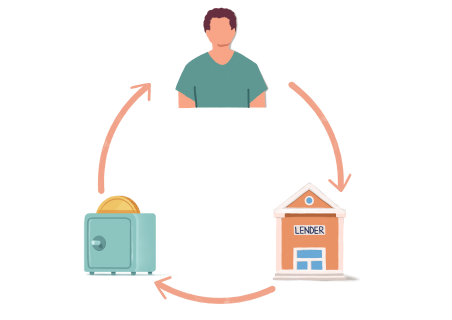
A Common Approach To Financing
1. Filling out FAFSA and getting any applicable grants, aid, etc.
2. Getting aid from your school. Appealing the university to increase aid.
3. Student takes out Stafford (Direct) loans to the maximum amount. This varies by year and dependency status, starting at $5,500 for the first year, at 6.52% plus a 1.057% origination fee.
4. If below 650 credit, applying for Parent PLUS loan (now capped at $20,000 per student per year). If 650+ credit, applying for private loans (through Juno and elsewhere) and comparing options.
Many parents who qualify for loans below 7% end up with a 10 year fixed rate private loan and pay a little bit every month (usually referred to as fixed or interest only repayment plans).
Frequently Asked Questions
Do I take out a loan for the whole academic year?
Most people take out one loan per year. Sometimes people want to take it a semester at a time and that works too. You typically cannot get a loan for multiple years.
How much can I borrow?
With Juno you can borrow up to the Cost of Attendance minus any aid. This number is set by the school. Parent PLUS used to work the same way, but it is now capped at $20,000 per student per year and $65,000 over the student's lifetime if the student first borrowed for undergrad after July 2026. Families who already borrowed for the student's current program keep the old limit for up to three years, or until the program's anticipated end -- whichever comes first.
Does it even matter which private lender I pick?
They will all offer slightly different rates, but that can amount to thousands of dollars at the end of the day. Get quotes from at least a few providers before making a decision.
Are there other reasons to take a Parent PLUS loan instead?
Federal Parent PLUS loans may be eligible for forgiveness and income contingent repayment (ICR) plans once consolidated into a Direct Consolidation loan. Both of these parks (forgiveness and ICR) are not available for loans taken via Juno's lending partners. Note that incoming Parent PLUS borrowers are no longer eligible for income-driven repayment plans, including the new RAP plan.
Do I have to make payments while my student is in school?
That is your choice. Juno's partners let you pick from fully deferred (no payments in school), fixed minimum / flat ($25 a month), interest only, or full repayment in school. The last two require a cosigner or qualifying income. Paying something while in school lowers the overall cost of the loan and often unlocks the autopay discount right away. Terms usually range from 5 to 20 years.
Are there any fees?
Not through Juno -- we screen our partner lenders to make sure they charge no application fees and no origination fees. Federal loans do charge an origination fee: 1.057% on Direct Subsidized and Unsubsidized loans, and 4.228% on Parent PLUS. That means you have to borrow $10,105.70 to receive $10,000 for school through a Direct Unsubsidized loan. Some private lenders bury these fees, so call and ask specifically.
We’re here to help!
You can email us at hello@joinjuno.com or call us at (339) 330-4147 with any questions